
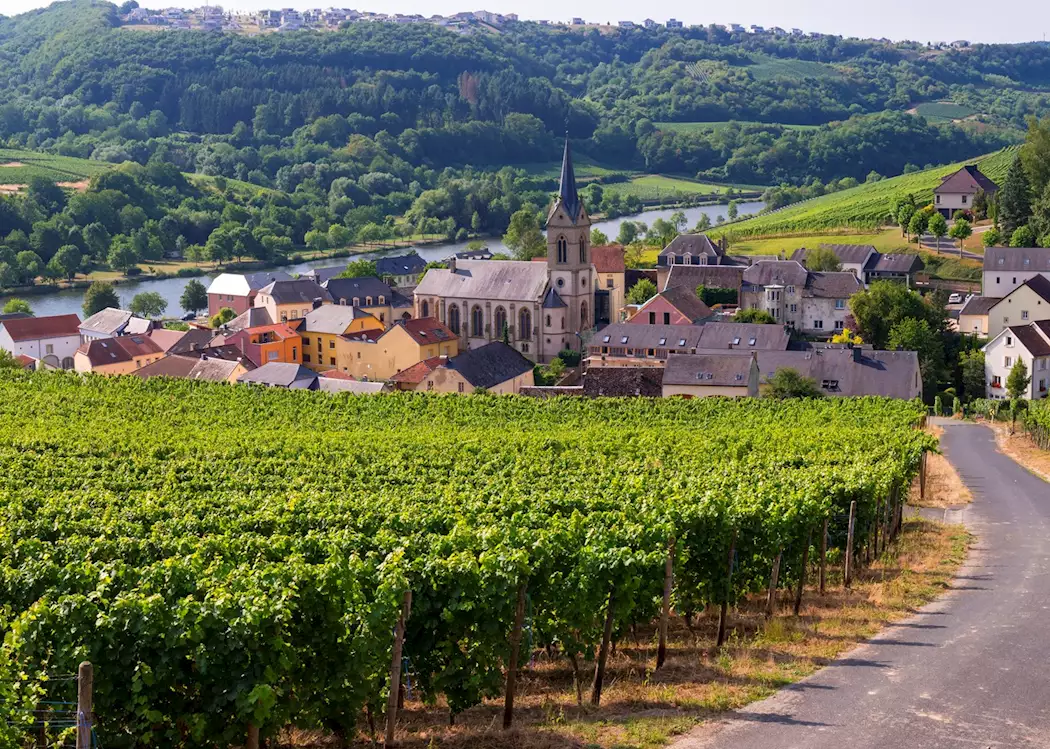
Luxembourg may be one of Europe’s smallest countries, but when it comes to wine, it offers a heritage and quality that rival much larger producers. Along the banks of the Moselle River, Luxembourg’s wine culture combines centuries-old tradition, meticulous craftsmanship, and a modern, luxury-oriented approach that is increasingly attracting international attention.
Luxembourg’s vineyards stretch for just over 40 kilometers along the Moselle Valley, bordering Germany. This compact wine region benefits from a cool continental climate, excellent sun exposure, and mineral-rich soils dominated by limestone and marl. These conditions create wines of remarkable freshness, elegance, and precision—qualities highly prized in the luxury wine market.
The region’s small size encourages artisanal production. Most wineries are family-owned, with generations of winemaking knowledge passed down and refined through modern techniques.
Luxembourg is best known for its white wines, particularly those made from classic Moselle grape varieties such as:
- Riesling – Elegant, mineral-driven, and age-worthy
- Pinot Gris – Rich yet balanced, often with subtle spice
- Auxerrois – A local favorite, soft and aromatic
- Pinot Blanc – Fresh, refined, and versatile
- Elbling – One of Europe’s oldest grape varieties, light and crisp
In addition to still wines, Luxembourg has earned a strong reputation for Crémant de Luxembourg, high-quality sparkling wine produced using the traditional method. Often compared to Champagne, Luxembourg Crémant stands out for its finesse, purity, and exceptional value in the premium segment. Crémant de Luxembourg is strictly regulated and must be produced entirely within the country using traditional bottle fermentation. It has become a symbol of national pride and luxury.